



CHOOSING BETWEEN ATX AND SFX PSU
Choosing between an ATX and an SFX power supply is not just about looks. It will determine whether your build stays cool and quiet or becomes cramped, hot, and noisy. PSU size influences airflow, fan noise, cable routing, and in tight builds, can even affect power stability under real gaming loads.
For entry level PC builders, the simple approach is to start with what your case supports, then choose a unit with enough electrical headroom and solid thermal performance for your hardware.
ATX POWER SUPPLY FORM FACTOR
ATX is the standard PSU form factor used in most mid tower and full tower cases. It offers more internal volume, which makes room for larger heatsinks, bigger fans, and less densely packed components. That extra space usually translates into lower fan speeds at the same load, which means less noise. It can also improve sustained thermal performance, since the PSU can move air more efficiently and keep internal temperatures lower.
SFX POWER SUPPLY FORM FACTOR
SFX is the compact PSU standard built for small form factor systems, especially Mini-ITX cases. Its smaller footprint can create a cleaner internal layout, improve GPU clearance, and make the system more portable without wasting space. Many modern SFX units deliver strong efficiency and solid performance in a tiny chassis, making them a great fit for high-end components in compact builds.
The key factor is airflow. Because space is tighter, an SFX PSU benefits from good case ventilation and careful cable routing to stay cool and quiet. Choose a well-reviewed model and pair it with a case that breathes well, and an SFX can run impressively clean and quiet for its size.
HIGH POWER DENSITY IN SFX
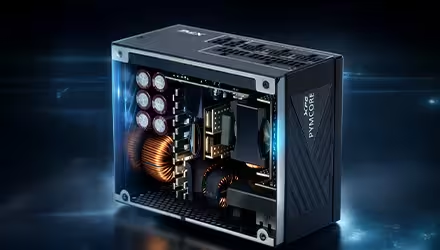
You will often see SFX units, like the PYMCORE SFX, marketed as high power density. This means the PSU packs a lot of power into a small box. It is why SFX models can hit up to 1000W while still fitting in tiny PC cases.
But more power in a smaller box also means more heat in a smaller space. When the PSU gets hotter, the fan usually has to spin faster, so it can get louder, especially during long gaming sessions or in cases with poor airflow.
While high power density lets you build a powerful small PC, it also means good airflow and a quality PSU is necessary, to avoid ending up with a hot and noisy system.
PSU QUALITY AND ELECTRICAL PERFORMANCE
Form factor does not determine PSU quality. A good SFX unit can perform on par with a good ATX unit. What matters is the specific platform and how it handles real-world conditions like transient response, since modern GPUs can produce rapid power spikes that stress PSU control loops and protection thresholds even when average wattage appears reasonable.
There are a wide range of ATX models available, along with more review coverage for transient response, hold-up time, and ripple, which makes selection easier. SFX units have fewer options and often cost more at the high end but can meet the same electrical standards when chosen carefully.
CABLE MANAGEMENT AND AIRFLOW IMPACT
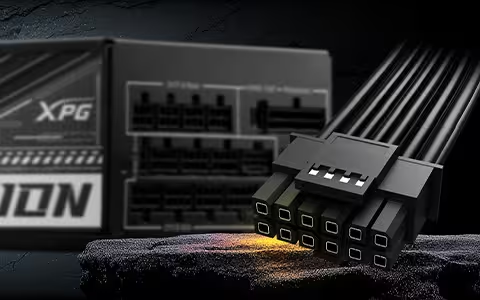
Cable management is another technical factor that first-time builders often underestimate. In small cases, excess cable length can block airflow and force tight connector bends, making the build hotter and harder to assemble. ATX cases usually hide slack under a PSU shroud, but SFX builds benefit from shorter, more flexible cables that keep airflow clear and routing easier.
ATX VS SFX POWER SUPPLY
If your case supports a standard PSU, ATX is the easy win: more options, easier cooling, and typically quieter operation. If you are building small on purpose, SFX is the smart move: it frees up space, improves layout in tight cases, and enables truly compact, portable builds.