



STANDAARD ATX 3.1- EN 12V-2X6-VOEDING
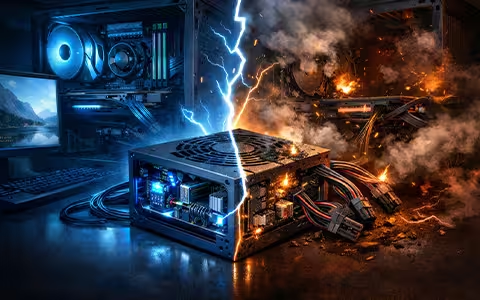
Met de release van NVIDIA's RTX 4090 werd een nieuwe voedingsconnector geïntroduceerd om de enorme 450W-vermogensbehoefte van de kaart te ondersteunen. Kort daarna kwamen er meldingen van oververhitting van de connector, die in sommige gevallen tot permanente schade leidde. Als reactie hierop is de ATX-standaard bijgewerkt met wijzigingen in het connectorontwerp.
Wat is de ATX-standaard?
Een volledig functionerende pc is opgebouwd uit componenten die door verschillende fabrikanten zijn gemaakt. Om compatibiliteit te garanderen, volgen het moederbord, de grafische kaart en de voedingseenheid (PSU) een vooraf gedefinieerde standaard. Dit heet de ATX (Advanced Technology Extended Standard), geïntroduceerd door Intel in 1995. In de loop der jaren heeft de ATX-standaard vele revisies ondergaan om gelijke tred te houden met de veranderende hardwarevereisten.
Waarom ATX belangrijk is
De ATX-standaard zorgt ervoor dat componenten van verschillende fabrikanten betrouwbaar kunnen samenwerken. Dat heeft ook betrekking op voedingen, inclusief het ontwerp van de connectoren voor elk onderdeel en de veiligheidsnormen waaraan deze moeten voldoen. Hierdoor kunnen consumenten gemakkelijk kiezen voor onderdelen die voldoen aan de ATX-norm en hoeven ze zich minder zorgen te maken over compatibiliteits- of voedingsproblemen.
Wat is er veranderd in ATX 3.1?
ATX 3.0 introduceerde de 12VHPWR-connector voor GPU-voeding. Deze enkele connector kan maximaal 600 W vermogen leveren en was bedoeld ter vervanging van de oudere 6+2 PCIe-connectoren. In de praktijk meldden sommige gebruikers problemen met oververhitting bij gebruik met energieverslindende GPU's zoals de RTX 4090.
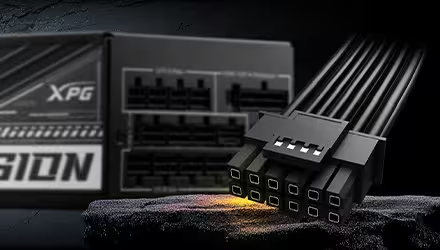
De belangrijkste wijziging van de ATX 3.1 was de introductie van de 12V-2x6 GPU voedingsconnector voor de voedingseenheid. Het is een verbeterde versie van de 12VHPWR, ontworpen om de robuustheid van de verbinding te verbeteren en het risico van oververhitting te verminderen. De GPU-aansluiting aan de zijkant blijft hetzelfde en GPU's blijven compatibel met zowel 12VHPWR- als 12V-2x6-voedingskabels.
Hebt u een ATX 3.1-voeding nodig?
Als u een pc bouwt met een geavanceerde NVIDIA RTX 40- of 50-serie GPU, wordt een ATX3.1-compatibele PSU ten zeerste aanbevolen. De 12V-2x6-connector kan tot 600 W leveren aan de GPU met een minimaal risico op oververhitting wanneer deze goed is aangesloten.
Voor topsystemen met meerdere RTX 4090 of 5090 GPU's is de FUSION 1600 TITANIUM een ideale combinatie. Dit is compatibel met ATX 3.1 en 80 PLUS en Cybenetics Titanium-gecertificeerd.
AMD gebruikt nog steeds de bewezen PCIe 6+2-pins connector voor de meeste GPU's, maar sommige RX 9070- en 9070 XT-modellen gebruiken de nieuwere 12V-2x6 interface. Kies in dergelijke gevallen een ATX 3.1-conforme voedingseenheid die ook PCIe 6+2-pins ondersteuning bevat, zoals de CORE REACTOR II. Deze ondersteunt zowel NVIDIA RTX 40/50-serie als AMD RX 7000/9000-serie GPU's, waardoor het geschikt is voor builds variërend van mainstream tot high-end
Zelfs als u een oudere GPU uit de RX 5000- of RTX 30-serie gebruikt, biedt een ATX 3.1-voedingseenheid nog steeds voordelen. Naast een verbeterde upgrade-gereedheid, is het ontworpen om beter om te gaan met power-excursies (korte stroompieken) die anders instabiliteit kunnen veroorzaken.
Wat is Power Excursion?
Hoogwaardige GPU's kunnen korte stroompieken van de PSU opvangen, vooral bij veeleisende werklasten zoals rendering, AI-afleiding of games met hoge resolutie. Als de voedingseenheid deze pieken niet kan verwerken, kan dit leiden tot systeeminstabiliteit of plotselinge uitschakeling.
De ATX 3.0-norm vereist conforme voedingseenheden die een kortdurende vermogensafgifte van ten minste 200% van hun nominale wattage tolereren, een vereiste die ook in ATX 3.1 geldt.
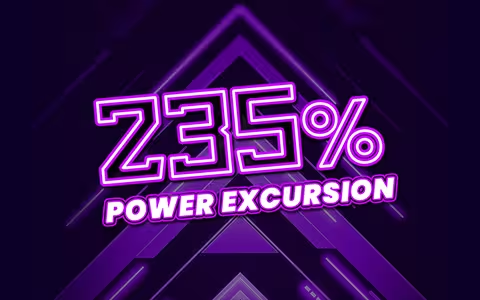
Alle XPG-voedingseenheden voldoen aan ATX 3.1 en ondersteunen energie-excursies tot 235%, waardoor het ATX-minimum wordt overschreden en extra stabiliteit en upgradegereedheid voor GPU's van de volgende generatie wordt geboden.